Why is my gas bill high after a gas line repair
A high gas bill after a gas line repair in Gilbert AZ usually means trapped air, a missed leak, or a pressure issue. Here is how to tell which one you have.
A high gas bill after a gas line repair in Gilbert AZ is almost always caused by one of three things: air still trapped in the line after the repair, a leak the first repair missed, or a pressure or appliance issue the repair exposed. The good news is that a properly repaired line should not raise your bill at all - if it did, something is still wrong. Below we walk through how to tell those three causes apart, what a correct repair looks like, and what 2026 pricing in the East Valley actually runs.
We handle gas line work across Gilbert every week, from new valve installs to full line replacements, and the calls we get most often are from homeowners who paid for a repair and then watched their bill climb. Here is how we sort it out.
The short answer: what actually causes the spike
A high gas bill after a gas line repair in Gilbert AZ is a symptom, not a diagnosis, and the fix depends entirely on which of three causes you are dealing with.
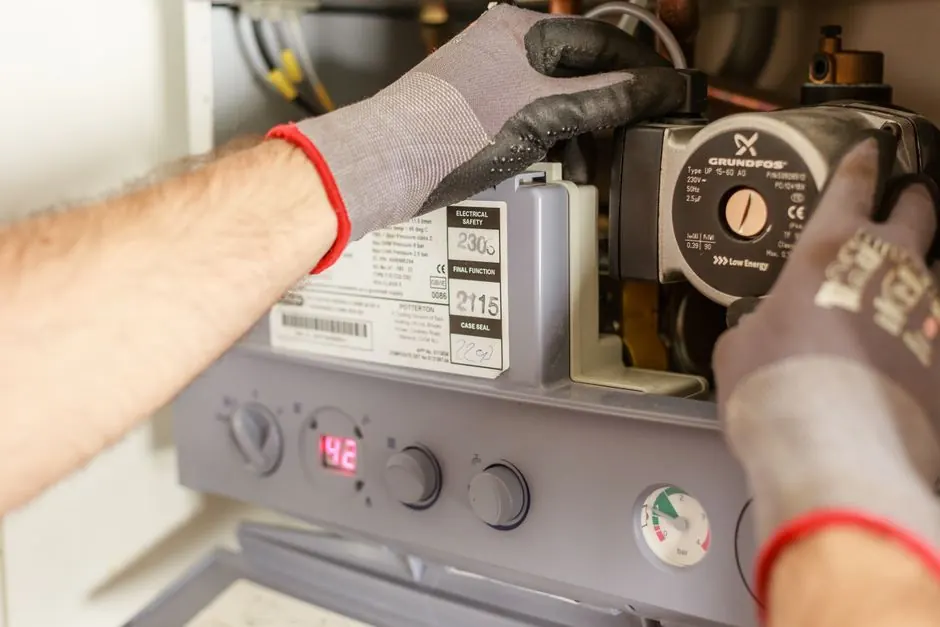
- Trapped air in the line. After any repair that opens the gas system, air enters the pipe. Your appliances have to purge that air before they burn gas efficiently. A water heater or furnace that is running on a partially air-filled line will run longer and burn more gas to hit the same temperature.
- A leak the repair did not fully seal. If the original problem was a pinhole or a cracked fitting and the repair only addressed part of it, gas is still escaping. Even a small leak - a quarter-inch opening at 7 inches of water column - can waste enough gas to show up on your bill.
- Pressure or appliance problems. Gas line pressure in a Gilbert home should sit between 6 and 7 inches of water column at the appliance. If your repair changed the line size or added a run, the pressure at the far end can drop, and appliances compensate by running longer.
Most homeowners we talk to assume the repair itself was bad. Usually it was not - it was incomplete. That is why we always run a pressure test before we close up a wall or backfill a trench.
Why is my gas bill high after a gas line repair in Gilbert AZ?
Why is my gas bill high after a gas line repair in Gilbert AZ comes down to one question: is gas still escaping, or is your equipment just working harder than it should?
If gas is escaping, you will usually smell it - the mercaptan additive Southwest Gas uses has a distinct rotten-egg odor. If you do not smell anything but the bill is up 20 to 40 percent, you are almost certainly looking at trapped air or a pressure issue. Both are fixable, and neither means the repair failed.
One more thing specific to Gilbert: our soil. Much of the town sits on caliche and expansive clay that shifts with our monsoon cycle. A line that was repaired in June can be stressed again by September if the trench was not bedded properly. We see this most in older neighborhoods where the original copper or poly lines are already 20 to 30 years old. If you are in one of the master-planned communities on the east side, our team handles plumbing in Cooley Station regularly and knows exactly how those lines were run.
How to tell a trapped-air spike from a real gas leak
Trapped air and a real leak look similar on a bill but behave very differently in the house, and you can usually tell them apart in about ten minutes.
Signs it is trapped air
- Your water heater or furnace ignites after a longer-than-usual delay, then runs normally.
- The bill spike is one cycle - one month - and then it settles back down.
- No odor near the appliance, the meter, or the repaired section.
- Pilot lights or electronic igniters take two or three tries to catch.
Signs it is a real leak
- A faint gas smell near the meter, the repaired section, or a specific appliance.
- The bill keeps climbing month over month, not just once.
- Dead grass in a stripe or patch over the buried line - a classic outdoor leak sign.
- Hissing or a faint whistle at a fitting when the system is pressurized.
If you are seeing any of the leak signs, stop and call. Do not try to chase it with a soapy-water spray on a line you cannot fully see. Our gas line services gilbert AZ include electronic leak detection and a full pressure test, which is the only way to know for certain.
How do I know if I have a gas leak in Gilbert?
How do I know if I have a gas leak in Gilbert is the question we get on almost every after-hours call, and the answer is: trust your nose first, then verify with a pressure test.
Natural gas in Gilbert is odorized, so a leak you can smell is a leak worth calling about immediately. If you smell gas, leave the house, do not flip any switches, and call Southwest Gas or 911 from outside. Once the utility has made the area safe, a licensed plumber can find and repair the actual leak.
If you do not smell gas but suspect one, the next step is a pressure test. We isolate the gas system, pressurize it to 10 PSI, and watch the gauge for 15 minutes. A drop of even half a PSI means gas is escaping somewhere. From there we use an electronic combustible gas detector to pinpoint the exact fitting or section. That is the same process behind every leak detection and repair gilbert AZ job we run, whether the leak is on a gas line or a water line.
What a gas line repair should actually include
A gas line repair in Gilbert AZ is a defined scope of work, not a patch job, and knowing what should be included protects you from paying twice for the same problem.
- Shut off and isolate. The meter valve gets closed and the affected section is isolated from the rest of the system.
- Pressure test before the repair. We document the starting pressure so we know exactly how much we are losing.
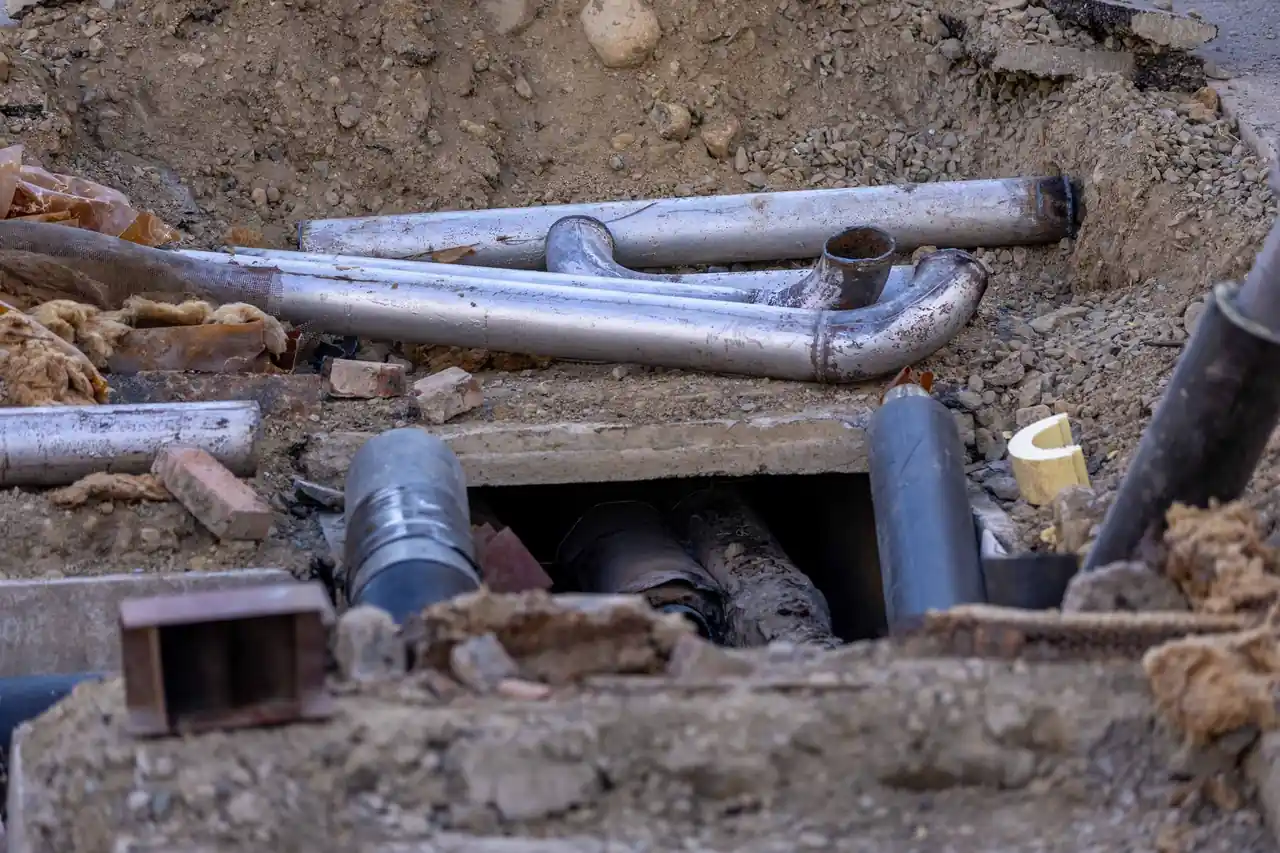
- Excavation or access. For buried lines, that means digging to the line. For interior lines, it may mean opening drywall.
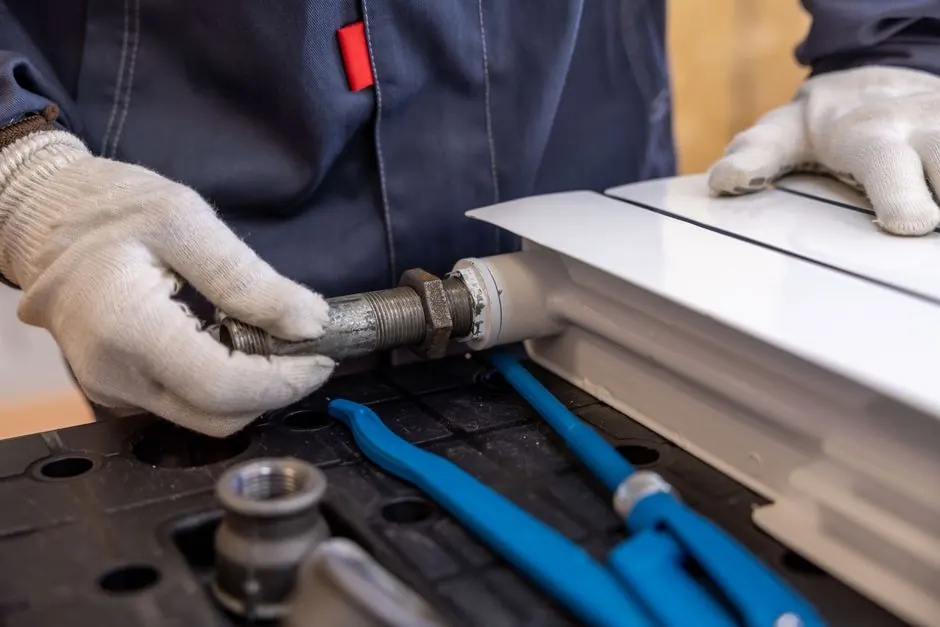
- The actual repair. Cut out the failed section, replace with the correct material - typically CSST or black steel for gas - and use approved fittings only.
- Pressure test after the repair. The system must hold 10 PSI for 15 minutes with no drop before we consider it done.
- Purge and relight. We bleed the air out of the line and relight every pilot and electronic ignition appliance.
- Documentation. You get the test results and a description of what was replaced.
If your previous repair skipped steps 5 or 6, that is almost certainly why your bill is high. Air left in the line and an untested system are the two most common causes we find when we are called out to redo someone else's work.
What gas line repair costs in Gilbert Arizona in 2026
Gas line repair cost in Gilbert Arizona in 2026 runs from about $350 for a simple fitting replacement to $2,800 or more for a full buried line replacement, depending on length, depth, and access.
Here is how that breaks down for the work we do most often:
- Fitting or valve replacement: $350 to $650.
- Short interior line repair (under 10 feet): $500 to $950.
- Buried exterior line repair: $900 to $1,800, including excavation and backfill.
- Full line replacement: $1,800 to $2,800 for a typical Gilbert single-family home.
- Leak detection and pressure test only: $150 to $300.
What drives the range is access, not parts. A fitting under a water heater is a two-hour job. The same fitting under a concrete patio is a full day. If your bill is high because the first repair missed something, the second repair is usually in the lower half of that range - we are fixing a specific point, not replacing a run.
For comparison, a water heater replacement - which is a separate job but often gets bundled with gas line work - runs $1,200 to $2,400 installed. If you are looking at both, our water heater installation gilbert AZ team can coordinate the gas connection and the unit swap in one visit.
Common mistakes that keep the bill high
The mistakes that keep a gas bill high after a repair are almost always process mistakes, not skill mistakes, and they repeat across every company we have followed on a job.
- Skipping the post-repair pressure test. If nobody held the system at 10 PSI for 15 minutes, nobody knows whether the repair actually sealed.
- Not purging the line. Air in the line makes every appliance run longer until it clears. On a long run, that can take several days of normal use.
- Using the wrong fitting. Gas fittings are not interchangeable with water fittings. A brass compression fitting rated for water will fail on gas.
- Repairing the symptom, not the cause. If the line failed because of soil movement, replacing one section without addressing bedding just moves the failure 10 feet down the trench.
- Ignoring the appliance side. A furnace with a dirty burner orifice will burn rich no matter how good the gas line is.
We see the last one more than people expect. A homeowner pays for a gas line repair, the bill stays high, and the actual problem is a water heater that has been running at reduced efficiency for a year. That is why we check the appliance side on every gas call.
When to call a professional
Call a professional the moment you smell gas, see a bill increase above 20 percent that does not settle within one billing cycle, or notice dead grass over a buried line.
Gas work in Gilbert is not a DIY category. The pressure test alone requires a gauge and the knowledge to interpret it, and an untested repair is a safety risk, not just a cost problem. We handle plumbing repairs gilbert AZ across the whole town, and gas line diagnosis is part of that work every day.
If you are in one of the older neighborhoods on the west side, our team also covers plumbing in Agritopia, where the mix of original 1990s lines and newer additions means we see more partial-repair callbacks than anywhere else in town. If your bill is high after a repair and you want a second opinion, we will pressure test the line, find the actual cause, and tell you plainly whether the first repair was the problem.
Frequently Asked Questions
Why is my gas bill high after a gas line repair in Gilbert AZ?
Usually trapped air in the line, a leak the repair missed, or a pressure drop at the appliance. A correct repair should not raise your bill. If the increase lasts more than one billing cycle, something is still wrong and needs a pressure test.
How do I know if I have a gas leak in Gilbert?
Smell is the first sign - Gilbert gas is odorized with mercaptan. If you smell it, leave and call Southwest Gas or 911. If you do not smell it but the bill keeps climbing, a 15-minute pressure test at 10 PSI will confirm whether gas is escaping.
How much does gas line repair cost in Gilbert Arizona?
In 2026, expect $350 to $650 for a fitting or valve, $900 to $1,800 for a buried exterior line, and $1,800 to $2,800 for a full replacement. Leak detection and pressure testing alone runs $150 to $300.
Can a plumber fix a gas line in Gilbert AZ?
Yes. A state-licensed plumbing contractor can repair, replace, and pressure test gas lines inside and outside the home. The work requires a permit in most cases, and the line must hold 10 PSI for 15 minutes before it passes inspection.
What causes a gas bill to spike in Gilbert Arizona?
Trapped air after a repair, an undetected leak, a failing water heater or furnace, and seasonal demand are the four common causes. In Gilbert, monsoon-season soil movement also re-stresses buried lines and can reopen a repair from earlier in the year.
Get help with plumbing in Gilbert
If your gas bill jumped after a repair and you want a straight answer about why, we will pressure test the line, find the cause, and fix it right the first time. We handle gas line work, leak detection, and full plumbing repairs across Gilbert - same-day service is available on most calls.
Call pro plumber gilbert at +1 (480) 288-5094 and we will get your gas system tested and your bill back to normal.